Question 1 of 10
A client wants the strongest natural nail shape for daily typing work. Which shape is the WORST choice?
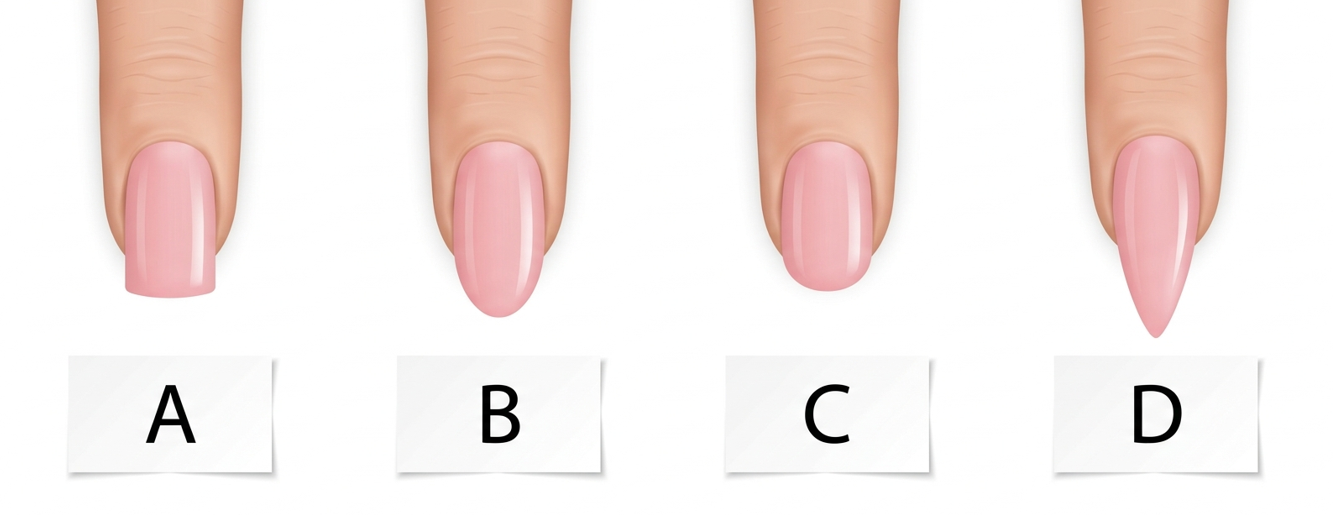
A C (round)
B B (oval)
C D (stiletto / pointed)
D A (square)
Explanation
Stiletto/pointed shapes (D) are the most fragile because most of the nail extends past the support of the nail bed and the narrow point concentrates stress. For a typist or client doing daily manual work, stiletto natural nails will chip, split, or break constantly. Suggest an oval or short squoval instead.
Question 2 of 10
MMA (methyl methacrylate) is:
A Banned by most state boards including Texas TDLR for nail use
B A type of UV gel
C The current standard for safe nail enhancements
D Only allowed for pedicures
Explanation
MMA causes severe allergic reactions, nail damage, and is extremely difficult to remove. EMA (ethyl methacrylate) is the legal alternative. Use of MMA can cost you your license.
Question 3 of 10
The region highlighted in yellow under the free edge of the nail is called the:
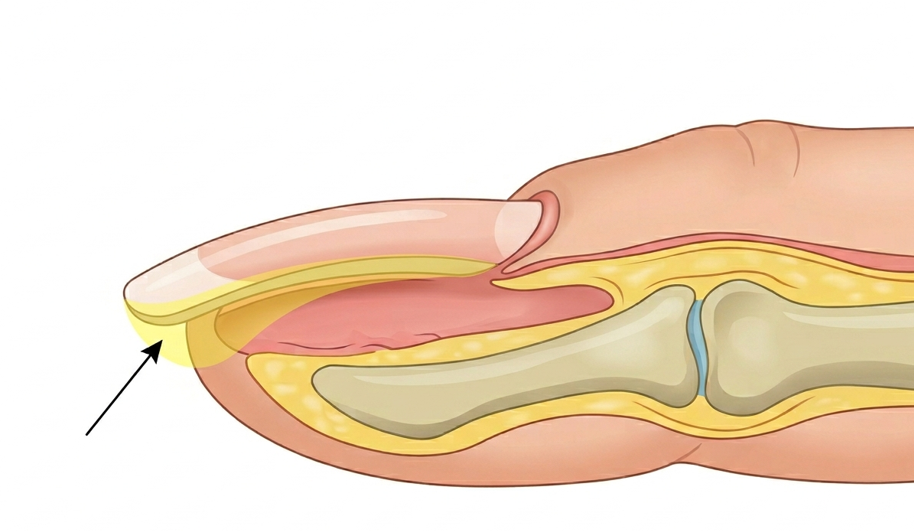
A Hyponychium
B Free edge
C Matrix
D Cuticle
Explanation
The hyponychium is the thickened skin underneath the free edge of the nail. It forms a protective seal that blocks bacteria and debris from entering under the nail plate.
Question 4 of 10
A whirlpool foot spa must be cleaned and disinfected:
A After each client
B Once a week
C Only when visibly dirty
D Once a day at closing
Explanation
Texas TDLR requires foot spas to be cleaned and disinfected after EVERY client, with a more thorough weekly disinfection and a documented log.
Question 5 of 10
Looking at the polish stroke diagram, in what order should the three strokes be applied for an even coat?
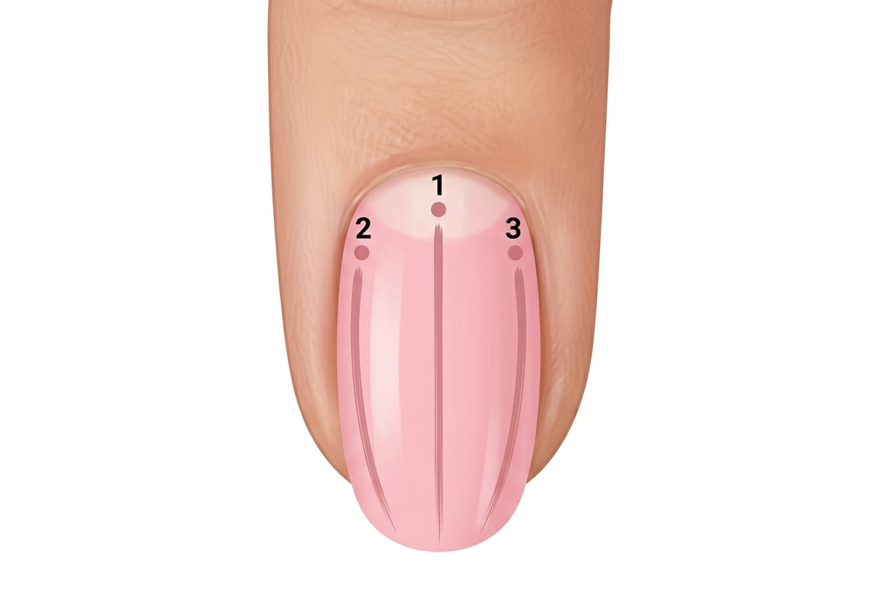
A 1 → 2 → 3 (center first, then both sides)
B Random — order does not matter
C 2 → 1 → 3 (left side, then center, then right)
D 1 → 3 → 2 (center, right, then left)
Explanation
Standard 3-stroke technique: load the brush, place it just above the cuticle in the CENTER of the nail (stroke 1), then sweep down each SIDE (strokes 2 and 3). Center first ensures the most polish lands on the visual focal point and the sides blend into it for an even, professional finish.
Question 6 of 10
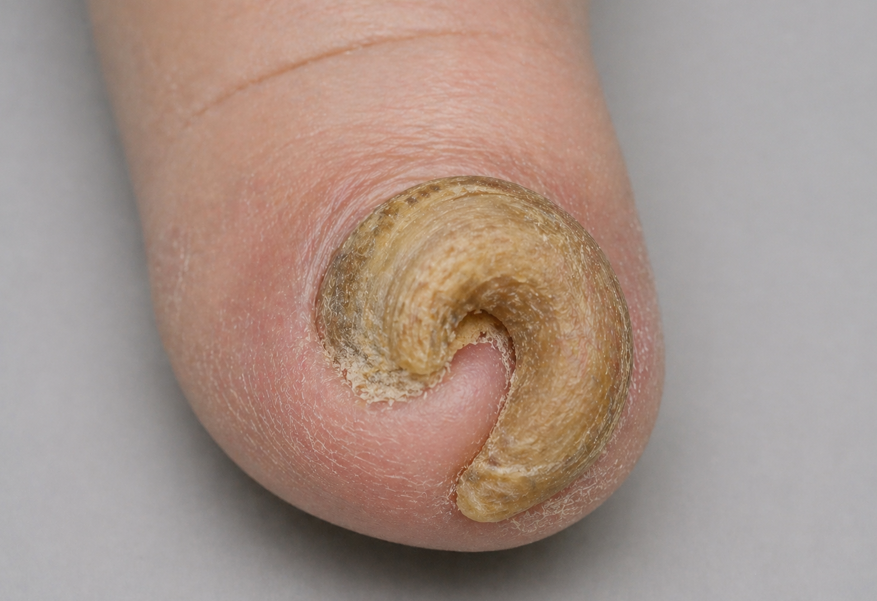
This severely thickened, curled, ram's-horn-shaped toenail condition is called:
A Onycholysis
B Koilonychia
C Onychomycosis
D Onychogryphosis
Explanation
Onychogryphosis ("ram's horn nail") is severe nail thickening and curvature, most often on the big toe. Causes include long-term neglect, trauma, or poor circulation in elderly clients. Refer to a podiatrist — do NOT attempt to file or cut down in the salon.
Question 7 of 10
Texas nail technician licenses are issued by:
A Local city government
B US Department of Labor
C Texas Department of Licensing and Regulation (TDLR)
D Texas Board of Cosmetology
Explanation
Since 2017, all cosmetology and barbering licenses in Texas — including Manicurist (Nail Technician) — are issued and regulated by TDLR. The former Texas Cosmetology Commission was abolished.
Question 8 of 10
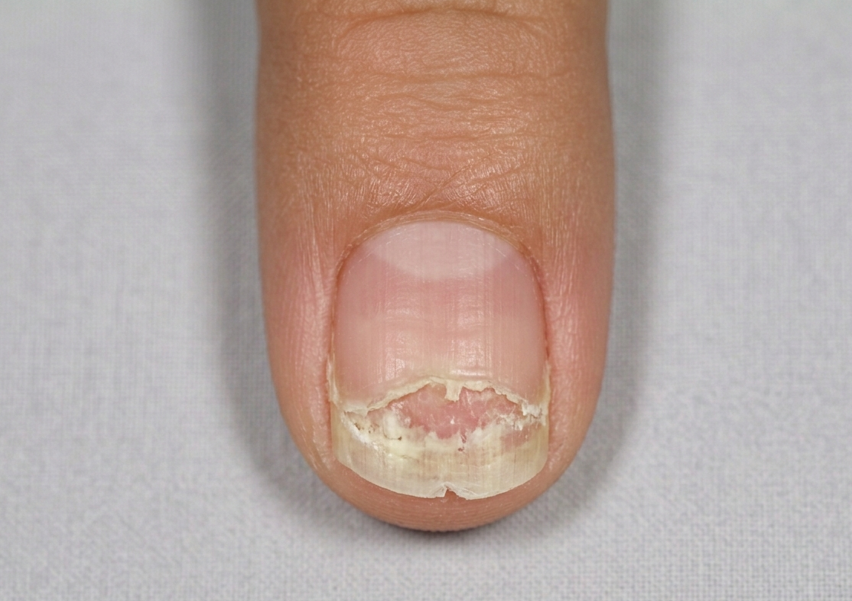
The condition shown — separation of the nail plate from the nail bed starting at the free edge — is called:
A Onychocryptosis
B Onycholysis
C Onychorrhexis
D Onychogryphosis
Explanation
Onycholysis is the painless separation of the nail plate from the bed (without shedding). Causes include trauma, fungal infection, certain medications, or chemicals. Suspicious cases — especially with discoloration — should be referred to a doctor.
Question 9 of 10
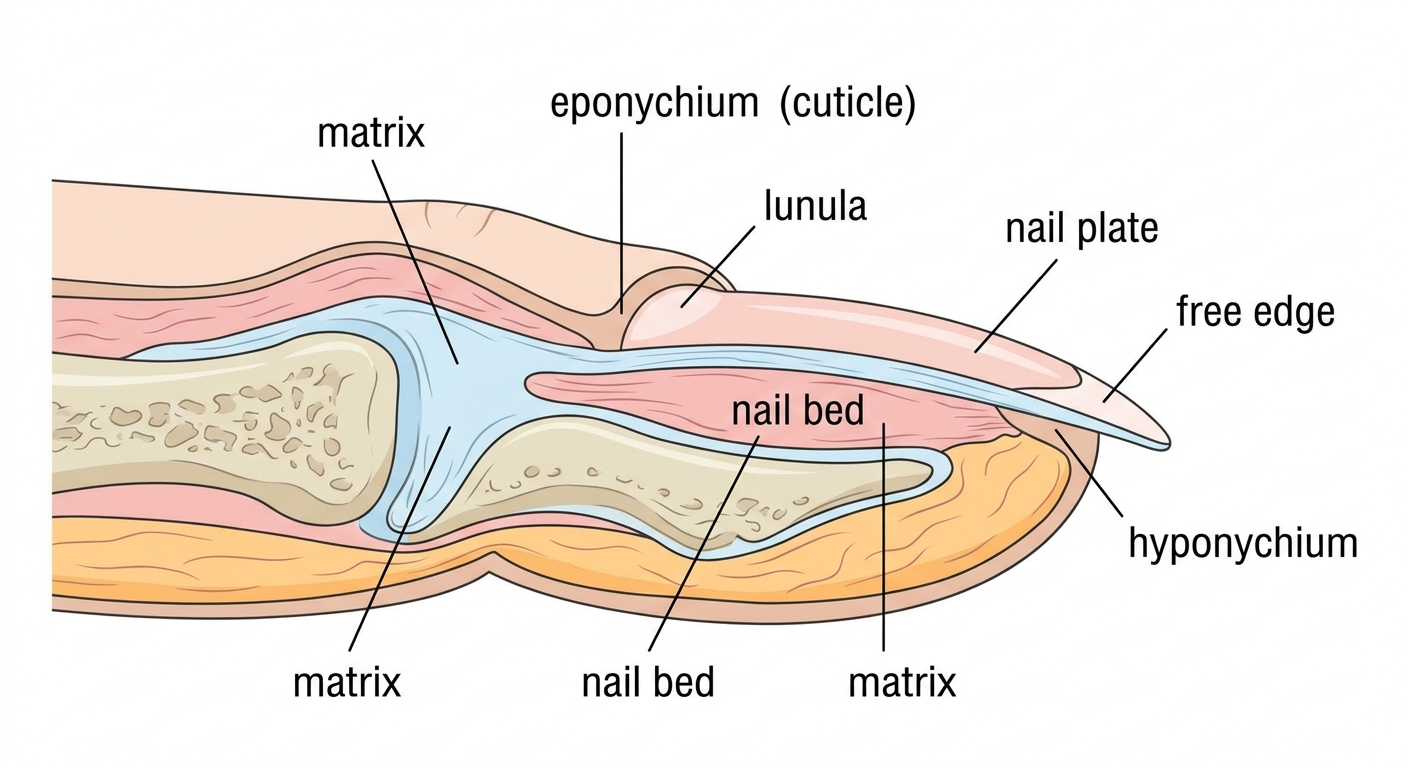
In the cross-section illustration above, which structure is responsible for producing new nail cells?
A Free edge
B Hyponychium
C Nail bed
D Matrix
Explanation
The matrix is the active cell-producing tissue at the base of the nail. Damage here can permanently deform the nail.
Question 10 of 10
What is the most effective way to prevent the spread of infection in a nail salon?
A Using antibacterial sprays
B Wearing latex gloves at all times
C Wiping tools with alcohol pads
D Hand washing with soap and water
Explanation
Frequent and thorough hand washing is universally recognized as the single most effective infection-control measure. Gloves and disinfectants are supplements, not substitutes.